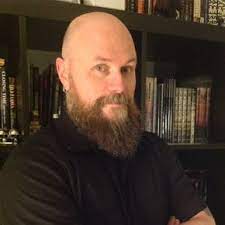
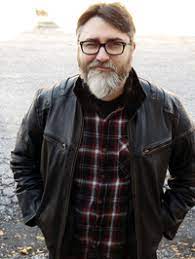
Bracken MacLeod writes some of the most gut-wrenching horror and suspense out there. He’s also one of the nicest guys I’ve ever met. The author of Stranded, Closing Costs and more, he is fearsomely bearded and awesomely gifted. This week, he sat down to answer five questions about subjects as diverse as gaming and toxic masculinity. For your reading pleasure, I give you Five For Writing with Bracken MacLeod.
 1-What drives a man to give up a perfectly reputable career like the law to focus on something as disreputable as writing?
HA! The reputability of law is questionable at best. They’re both essentially storytelling professions. I wish I could tell you that a trial is a quest for the truth; it’s anything but. There isn’t a jury in America, or probably the world, that deliberates with true detachment based solely on the quality of facts presented in evidence. People want to be persuaded by a narrative and a character they can relate to and believe in. Trying a case is taking arguable facts, and attempting to build a story around them so to convince twelve people they ought to buy your version over your opponent’s. Given the kinds of cases I used to handle, I much prefer making up my own stories with purely imaginary stakes. As a writer, if I tell the tale unconvincingly, the worst that happens is a poor review.
2- Toxic masculinity is a theme you’ve examined in your work. Why did you choose to explore that?
Since I don’t write about supernatural monsters as much as I do real people in variably plausible situations, toxic masculinity is the kind of antagonistic force that haunts my imagination most when I’m imagining horror/thriller narratives. I think Bell Hooks put it perfectly when she wrote, “[A boy] learns that his core feelings cannot be expressed if they do not conform to the acceptable behaviors sexism defines as male. Asked to give up the true self in order to realize the patriarchal ideal, boys learn self- betrayal early and are rewarded for these acts of soul murder.” My newest book, Closing Costs, confronts this by depicting someone who is abusive and violent, but also completely unprepared for his manhood to be challenged or outdone in any way. His fragility is the source of his violence and suffering for everyone around him.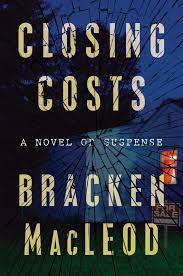
The consequences of a toxic derangement of the essence of a man’s emotional and intellectual wellbeing are at once as predictable and unpredictable as a game of Russian Roulette. Here’s something inerrantly destructive. We know that gun is going to go off eventually. What we don’t know is exactly when, or who is getting killed. Let’s play!
All of my books are issue driven. You don’t have to be tuned in to any particular issue to enjoy them, but if you are, I hope it helps the reader view something from a perspective that provides some insight.
3-You’ve published two highly successful collections of short fiction. Do you prefer short stories or novels, and why?
Novels, by far. They’re easier. I’m only partially kidding. Short stories are fun and I get to explore themes and situations I couldn’t in commercial novel length work, but what I really like to do is deep dive into emotional character experiences. The best place for me to do that is over the course of a novel. A short story and a novel can both have real hard impact, but I find it a lot harder to make that moment of emotional resonance really hit hard when you’ve barely gotten a chance to know a character.
 4-You’re an avid gamer. What’s the appeal of gaming to you?
The biggest attraction is collaborative story-telling. I DM a 5e D&D game for my son and wife and some friends of ours, as well as an irregular Mörk Borg game with a bunch of other writers in my social circle. (Sometimes I get to be a player, but not often.) It’s such an amazing time to sit with engaged friends and create stories together. I’ve been playing tabletop RPGs since I was eleven or twelve, and had to take a long hiatus from play while I was practicing law (another reason to quit!). I never realized how much I missed it until I decided to try to teach my kid how to play.
I play video games too, but that’s a different animal. It’s participatory, but not all that collaborative when it comes to story. Then again, sometimes, you just gotta run and gun through waves of space demons with glowy swords.
5-What do you want to see in horror fiction that you haven’t seen yet?
That’s such a difficult question. Mostly, I want to see more of what I’ve seen too little of—stories that center the people and traditions that don’t often get the spotlight in traditional horror. Films like Get Out, the new Candyman, and The Vigil are perfect examples of what we need a lot more of in literature as well as cinema. Stories about traditionally overlooked people and cultures in their own stories, instead of as side characters and “exotic” threats for the same kind of protagonists we always see.
Huge thanks to Bracken for taking the time to give such thoughtful and thought-provoking answers! Until next time…
 1-How did you get into writing?
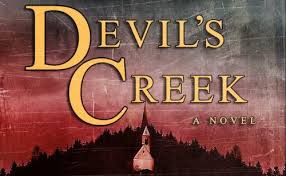 3-You mixed the rural and the cosmic to great effect in Devil’s Creek. How did you come up with that pairing?
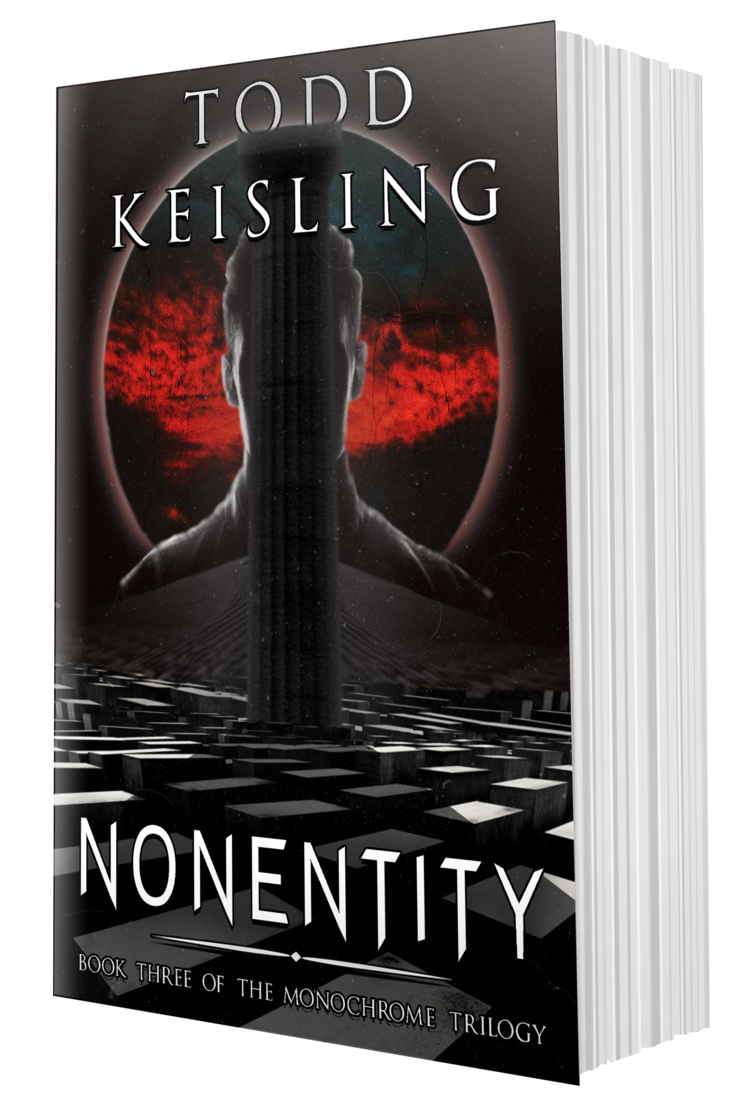 5-There was a big gap between books two and three of the Monochrome trilogy. What made you decide to pick that back up?
 who just happens to keep a mannequin named Sebastian by her desk at all times. (More on him below). I have known her for well over twenty years, ever since she agreed to write a short fiction piece for me back in the White Wolf days, and she doesn’t hold that against me. Witty, wise and wonderful, here’s Five For Writing with P.D. Cacek.
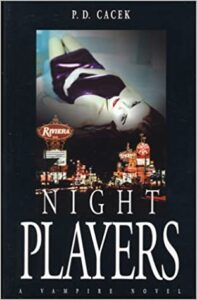 in the hunt and flaunting their total disregard for their formal corporal selves (unless I’ve written them*). Okay, so you’ve lived centuries…get over yourselves. I feel werewolves, even though they are monsters, still retain more of their “humanness” for the simple reason that not only are as much a victim of their curse as the poor (slow) souls they hunt, but are doomed to live with the knowledge of what they have become. They have no power to
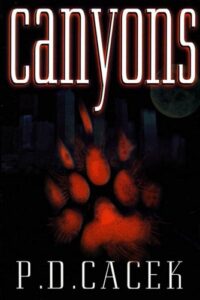 defense?
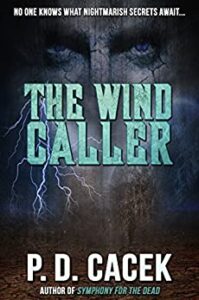 Another personal bit of info is that I love what I call “vulching,” which, in my case, is to swoop in like a vulture on a “Going Out Of Business” sales in search of bargains. Usually I come away with a few things, so when I saw that the JC Pennys in the King of Prussia mall was going out of business, I swooped.
 1-You tend to write in series instead of standalone books. What’s the appeal of a series to you?
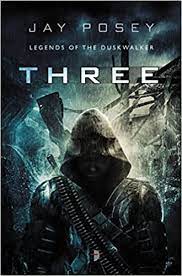 unusual traits that make him unique among everyone else he interacts with, but it isn’t really until the third book that it becomes clear why he is the way he is. I kept trying to find a place to explain it all in that first book. There just wasn’t space. It wasn’t relevant to the story that was unfolding, and the amount of context that readers would have needed for it to make sense was just too much to fit in as an information dump. But after a couple of books’ worth of exploring the state of the Duskwalker world, I felt like readers had lived in it long enough that the third book could reveal that background in a natural way that was integral to the story instead of an “As you know, Bob, Three is special because …” kind of thing.
 Mostly a direct challenge from my agent, the esteemed Sam Morgan. After the Outriders books, when we were discussing what to tackle next, he said he’d really like to see what I could do on a more epic scale. My first two series were focused on small groups of people, so when Sam said “how about more epic”, I went from “small group with personal stakes” to “galaxy spanning empire with the fate of the human race in the balance”. It was quite a challenge for me and really stretched me creatively, but I’m really glad that Sam pushed me to give it a shot.
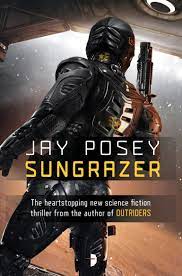 4-The defining trait of many of your characters is utter competence. What’s the appeal of writing
 2-What do you think are the main differences between TTRPG and video game writing?
 3-What were the challenges in writing for Rainbow Six: Siege, a game that doesn’t necessarily have a traditional narrative structure?